Understanding Chicken Vaccination Schedules in Uganda: A Complete Prevention Guide
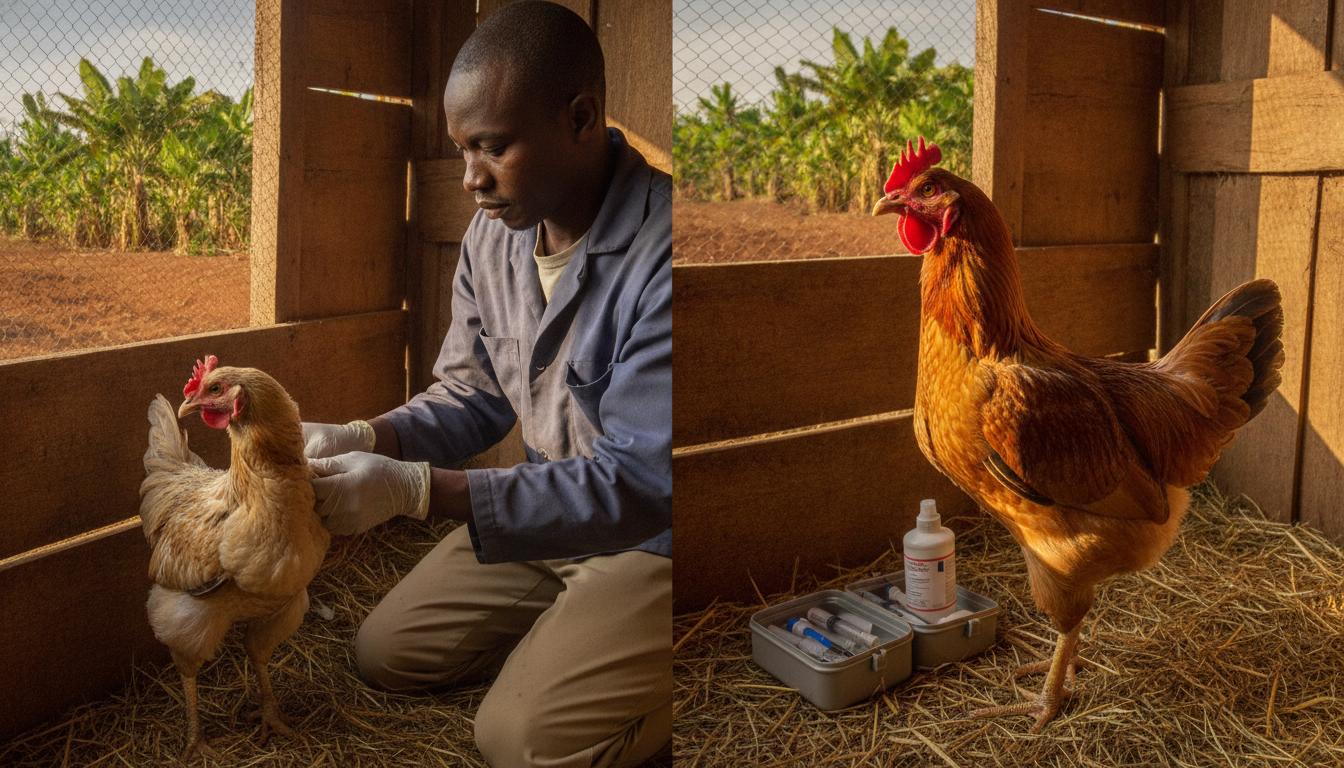
Disease prevention is the single most important investment you can make in your poultry farm. One outbreak of Newcastle Disease or Gumboro can wipe out your entire flock overnight, destroying months of work and investment. This guide gives you the exact vaccination schedule, disease identification tips, and prevention strategies that work in Uganda's climate.
Table of Contents
Why Vaccination is Non-Negotiable
Many backyard farmers skip vaccination because they think it's expensive, complicated, or only necessary for large commercial farms. This is the most expensive mistake you can make.
Here is the reality:
- A single outbreak of Newcastle Disease can kill 80-100% of your unvaccinated flock within days
- Gumboro (Infectious Bursal Disease) attacks young birds specifically, often before they start laying
- Fowl Pox spreads through mosquito bites and leaves birds permanently scarred and less productive
- Vaccination costs less than $5 for an entire flock of 50 birds — losing one hen costs more than that
The Diseases You Need to Know
Newcastle Disease (NCD)
The most dangerous disease for backyard flocks in Uganda.
- Symptoms: Twisted neck, paralysis, greenish diarrhea, sudden death, gasping
- Spreads by: Air, contaminated feed, wild birds, human clothing, equipment
- Mortality rate: 80-100% in unvaccinated flocks
- Vaccine available: Yes — LaSota or Hitchner B1 strains (eye drop or drinking water)
Infectious Bursal Disease (Gumboro)
Targets young birds and destroys their immune system.
- Symptoms: Swollen bursa (visible as a swollen rear end), watery diarrhea, depression, death within 3-5 days
- Spreads by: Direct contact, contaminated litter, feed, water
- Mortality rate: 20-60% in young birds
- Vaccine available: Yes — intermediate or hot strain depending on local disease pressure
Fowl Pox
Mosquito-borne disease that leaves permanent scars.
- Symptoms: Scabs on comb, wattles, and face; wart-like growths; reduced egg production
- Spreads by: Mosquitoes and direct contact
- Mortality rate: Low (5-10%), but severely reduces productivity for months
- Vaccine available: Yes — wing-web stab method
Marek's Disease
A cancer-like virus that paralyzes birds.
- Symptoms: One leg dragging, wing paralysis, inability to stand, weight loss
- Spreads by: Feather dust, inhalation, contaminated environment (virus survives for months)
- Mortality rate: 20-60% if unvaccinated
- Vaccine available: Yes — administered at day-old in hatcheries
Coccidiosis
A parasite, not a virus, but just as deadly.
- Symptoms: Bloody diarrhea, ruffled feathers, huddling, death within 5-7 days
- Spreads by: Contaminated litter, wet floors, overcrowding
- Prevention: Dry litter, anticoccidial drugs in feed, good hygiene
The Complete Vaccination Schedule for Uganda
This schedule is based on recommendations from the Uganda Ministry of Agriculture, Animal Industry and Fisheries (MAAIF), combined with real-world experience from farmers across Mpigi, Kampala, and Wakiso districts.
Vaccination Schedule for Layers (Egg-Producing Hens)
| Age | Vaccine | Disease | Method | Notes |
|---|---|---|---|---|
| Day 1 (at hatchery) | Marek's HVT | Marek's Disease | Subcutaneous injection | Must be done by hatchery. If buying older birds, check if they received this. |
| Day 1-3 | Newcastle (HB1) | Newcastle Disease | Eye/nose drop | Best for young chicks. More reliable than water vaccination at this age. |
| Day 14 | Gumboro (intermediate) | Infectious Bursal Disease | Drinking water | Deprive water for 2 hours before. Add vaccine to calculated water volume. |
| Day 21 | Newcastle (LaSota) | Newcastle Disease | Eye/nose drop or drinking water | Booster dose. Eye drops give better immunity than water. |
| Day 28 | Gumboro (intermediate) | Infectious Bursal Disease | Drinking water | Second dose to build strong immunity. |
| Week 6-8 | Fowl Pox | Fowl Pox | Wing-web stab | Only if Fowl Pox is common in your area. Check with local vet. |
| Week 8-10 | Newcastle (LaSota) | Newcastle Disease | Drinking water | Booster before point of lay. Water method acceptable for older birds. |
| Week 16-18 (Point of Lay) | Newcastle (LaSota) + IB | Newcastle + Infectious Bronchitis | Drinking water or eye drop | Critical timing — just before egg production starts. Do not skip. |
| Every 3-4 months | Newcastle (LaSota) | Newcastle Disease | Drinking water | Repeat for life of the flock. Mark calendar. |
Vaccination Schedule for Broilers (Meat Chickens)
| Age | Vaccine | Disease | Method | Notes |
|---|---|---|---|---|
| Day 1 (hatchery) | Marek's HVT | Marek's Disease | Injection | Must be done by hatchery. |
| Day 1-3 | Newcastle (HB1) | Newcastle Disease | Eye/nose drop | Essential for broilers — NCD kills fast. |
| Day 14 | Gumboro (intermediate) | Infectious Bursal Disease | Drinking water | Do not use hot strain — too strong for broilers. |
| Day 21 | Newcastle (LaSota) | Newcastle Disease | Drinking water | Final NCD vaccine before slaughter at 6-7 weeks. |
How to Identify Disease Before It Spreads
Early identification is the difference between losing 2 birds and losing 20. Check your flock every single morning for these warning signs:
The 5-Minute Morning Health Check
- Appetite: Are all birds rushing to the feeder? One bird standing back is sick.
- Droppings: Normal droppings are firm with a white cap. Watery, bloody, or green droppings mean trouble.
- Combs: Should be bright red. Pale, blue, or scabby combs indicate illness.
- Movement: Healthy birds are active and curious. Lethargic, isolated, or limping birds need immediate attention.
- Eyes and nostrils: Clear eyes and dry nostrils are normal. Discharge, swelling, or crusting means respiratory infection.
Biosecurity Rules That Save Flocks
Vaccination is your foundation, but biosecurity is your daily shield. Here are the rules every serious farmer follows:
- Quarantine new birds for 2 weeks. Always. No exceptions. Even birds from your trusted neighbor can carry disease without showing symptoms.
- Change shoes before entering your coop. If you visit another farm, market, or even a friend's chicken house, your shoes carry disease. Keep dedicated coop shoes.
- Control visitors. Everyone who enters your coop should dip their shoes in disinfectant. A simple footbath with water + Jik or formalin at the entrance works.
- Keep wild birds out. Wild birds are the #1 carriers of Newcastle Disease. Use wire mesh, not open windows, and keep feed covered.
- Disinfect equipment. Feeders, waterers, and tools should be washed weekly with soap and disinfectant.
- Burn or bury dead birds. Never throw dead chickens in a pit where dogs or wild birds can access them. Disease spreads from carcasses.
- All-in, all-out system. For broilers, empty and disinfect the house completely between batches. Don't mix ages.
Vaccination Costs in Uganda (2026)
Vaccination is incredibly affordable compared to losing your flock. Here's what you can expect to pay at veterinary supply shops in Kampala, Mpigi, and major towns:
| Vaccine | Package Size | Approximate Cost (UGX) | Treats (Birds) |
|---|---|---|---|
| Newcastle LaSota | 1000 doses | 15,000 - 25,000 | 1,000 (share with other farmers) |
| Newcastle HB1 | 1000 doses | 20,000 - 30,000 | 1,000 |
| Gumboro (intermediate) | 1000 doses | 25,000 - 40,000 | 1,000 |
| Fowl Pox | 1000 doses | 30,000 - 50,000 | 1,000 |
| Marek's (day-old) | Per chick at hatchery | 200 - 500 per chick | 1 (already done at hatchery) |
Frequently Asked Questions
Q: Where can I buy vaccines in Uganda?
A: Veterinary supply shops in Kampala (Nakivubo, Kisenyi), Entebbe, and major towns stock common vaccines. In Mpigi, check with the district veterinary office or local agro-input dealers. Some vaccines require cold storage, so buy from shops with refrigerators.
Q: Can I vaccinate my chickens myself?
A: Yes, for most vaccines. Drinking water and eye-drop vaccines are straightforward. Wing-web stabs (Fowl Pox) require a bit more practice. Many farmers learn by watching their vet do it once, then handle it themselves. However, for your first time, invite a veterinary officer or experienced farmer to supervise.
Q: What if I miss a vaccination date?
A: Don't panic. Give the vaccine as soon as you remember. For Newcastle Disease, a few days late is better than never. However, if you miss the Gumboro window (days 14-28), consult a vet — the bird's immune system may have already been compromised.
Q: Do I need to vaccinate if my chickens never leave the coop?
A: Yes. Newcastle Disease virus travels through the air, on wild birds, on your shoes, and even on the wind. "Closed" flocks are not truly closed unless they are in a sealed building with filtered air — which backyard farms are not.
Q: Can I eat eggs from vaccinated chickens?
A: Yes, absolutely. Vaccines for chickens are safe for human consumption. The vaccines stimulate the bird's immune system but do not leave residues in eggs or meat. This is a common myth that prevents vaccination — don't believe it.
Keep Your Flock Healthy
Need day-old chicks that are already vaccinated against Marek's? Or want to talk through a vaccination plan for your existing flock? We're here to help.
Contact Unified Farm BLM Back to Beginner Guide